 CatsInfo
Kitten Feeding Schedule: How Much and How Often by Age
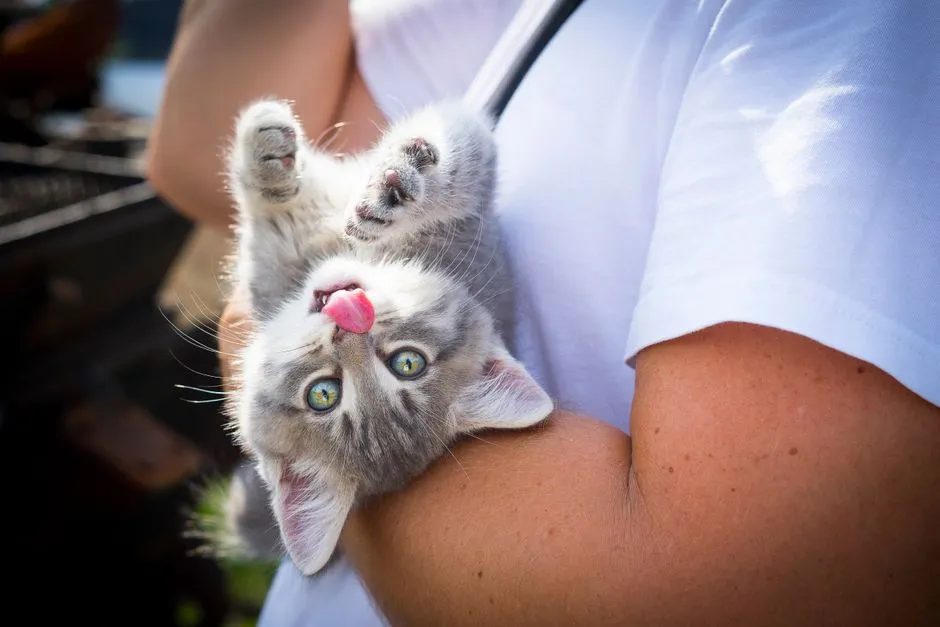
- How much to feed a kitten, in plain terms
- Start with the food label, then adjust
- How often to feed a kitten by age
- Kitten feeding chart by age
- The newborn stage: 0 to 4 weeks
- Weaning: 4 to 8 weeks
- Wet food, dry food, or both?
- Free feeding versus scheduled meals
- Switching to adult food
- When to call the vet
- The one-line takeaway
How much to feed a kitten, in plain terms
There is no single number that fits every kitten, because how much a kitten needs changes almost week to week. A 10-week-old and a 6-month-old are barely the same animal nutritionally. What stays constant is the goal: steady growth, a lean-but-not-skinny body, and enough energy to be a maniac between naps.
Kittens burn calories at a startling rate. Pound for pound, a growing kitten needs roughly two to three times the energy an adult cat does, because it is building bone, muscle, and organs at the same time as running around. That is why kitten food exists as its own category and why "just give it a bit of the adult cat's food" undersells what a growing body actually requires.
The most reliable way to get the amount right is to combine three things: the feeding guide printed on your kitten's food, your kitten's age and weight, and what your own eyes and hands tell you about their body condition. Treat the label as a starting estimate, not gospel, and adjust from there.
Start with the food label, then adjust
Every complete kitten food carries a feeding chart on the package, usually organized by the kitten's current weight or by age. This is the single most useful number you have, because it is calibrated to that specific product's calorie density. A dense, premium food and a budget food can differ a lot in calories per cup, so a generic "feed half a cup" rule from the internet is close to meaningless without knowing the food.
Here is the honest catch: those charts are averages, and they tend to run a little generous. Use the label amount as your baseline, then let body condition fine-tune it.
To read body condition on a kitten:
- Run your hands along the ribs. You should feel them easily under a thin layer, like feeling your knuckles through the back of your hand. Ribs you can see from across the room means too thin; ribs you have to press hard to find means too heavy.
- Look from above for a slight waist behind the ribs.
- Expect kittens to look a touch rounder than adults. A soft belly after a big meal is normal. A hard, distended, pot-bellied look that does not go down can point to worms and is worth a vet visit.
If the ribs are getting hard to feel, ease the portions down. If your kitten looks angular and is always ravenous, nudge them up. Weigh your kitten every week or two if you can; steady upward weight gain is the clearest sign the amount is right.
A note on measuring
Measure food rather than eyeballing it. A cheap kitchen scale weighing grams is more accurate than a scoop, and it makes the label chart actually usable. If you feed wet food, the can or pouch already tells you the portion, which makes life easier.
How often to feed a kitten by age
Frequency matters as much as amount, and it changes as the kitten grows. Very young kittens have tiny stomachs and high energy needs, so they need many small meals. As they mature, meals get larger and less frequent.
The general arc looks like this:
- Under 4 weeks: milk only, around the clock.
- 4 to 8 weeks: weaning onto solid food, small meals often.
- 2 to 4 months: roughly 4 meals a day.
- 4 to 6 months: about 3 meals a day.
- 6 to 12 months: 2 to 3 meals a day, settling into an adult rhythm.
Young kittens are also prone to low blood sugar (hypoglycemia) if they go too long without eating, which is one reason the small-and-frequent approach matters early on. A tiny kitten that skips meals can crash surprisingly fast.
Kitten feeding chart by age
Use this as a map, not a prescription. Amounts depend entirely on the food's calorie density and your individual kitten, so the columns you can rely on most are food type and meals per day. Always cross-check the portion against the label and your kitten's body condition.
| Age | Meals per day | Main food | What's happening |
|---|---|---|---|
| 0–4 weeks | On demand, every 2–4 hrs (incl. overnight) | Queen's milk or kitten milk replacer (KMR) | Fully milk-dependent. Never cow's milk. Orphans need bottle-feeding by weight. |
| 4–5 weeks | 4–6 small meals | KMR plus a wet gruel (wet food mashed with a little warm water/KMR) | Weaning begins. Kitten laps and tastes solids while still nursing. |
| 5–8 weeks | 4–5 meals | Gruel thickening toward plain wet/soft kitten food | Weaning completes, usually by about 8 weeks. Fresh water available. |
| 8 weeks–4 months | 4 meals | Complete kitten food (wet, dry, or both) | Fastest growth phase. High calorie needs relative to size. |
| 4–6 months | 3 meals | Complete kitten food | Growth continues; appetite still strong. Watch body condition around neuter/spay. |
| 6–12 months | 2–3 meals | Complete kitten food | Growth slows toward the end. Begin planning the switch to adult food. |
| 12+ months | 2 meals | Transition to adult food | Most cats are "adult" at a year. See notes below on large breeds. |
Large-breed cats such as Maine Coons and Ragdolls keep growing longer, often to 18–24 months, and many stay on kitten or growth formulas past their first birthday. If you have one of these breeds, ask your vet when to switch.
The newborn stage: 0 to 4 weeks
If a mother cat is present and healthy, she does this job better than any human can. Your role is to keep her well fed with kitten food (nursing burns enormous energy) and otherwise leave the kittens to nurse on demand.
Orphaned or hand-reared kittens are a different situation and genuinely demanding. They need a proper kitten milk replacer, warmed to body temperature, fed by bottle every few hours around the clock, with the amount based on their weight. Cow's milk is not a substitute; it lacks the right nutrients and causes diarrhea, which is dangerous in an animal this small. Very young kittens also cannot regulate their own temperature or eliminate without stimulation.
If you find yourself responsible for kittens this young, treat it as a hands-on veterinary situation, not a casual one. Call a vet or an experienced rescue early for a feeding plan and to weigh the kittens. Healthy neonates should gain weight every single day; a kitten that is not gaining, or is losing, needs help quickly.
Weaning: 4 to 8 weeks
Weaning is a gradual handoff from milk to solid food, not a switch you flip. Around three and a half to four weeks, kittens start showing interest in what mum eats. You support that by offering a "gruel": complete wet kitten food (or moistened kitten kibble) mashed with a little warm water or kitten milk replacer into a soft, soupy texture.
Over the following weeks you thicken the gruel step by step until the kitten is eating plain wet or softened solid food, usually by around eight weeks. Expect mess. Kittens walk through it, wear it, and generally treat their first meals as a full-body experience. That is normal.
Fresh water should be available from the point solids are introduced. Once a kitten is eating solid food, it does not need milk of any kind, and it certainly does not need cow's milk.
This is also the stage where good habits form. Offering both wet and dry textures now makes for a less fussy adult later. For the bigger picture on this age, our guide to kitten care covers the non-food essentials alongside feeding.
Wet food, dry food, or both?
All three approaches can raise a healthy kitten, as long as the food is a complete and balanced diet formulated for growth. That phrase on the label is what matters most; it means the food meets the nutritional profile a growing kitten needs, rather than being a treat or a topper.
- Wet food is high in moisture, which supports hydration and urinary health, and many kittens find it very palatable. It spoils once out, so it suits meal feeding.
- Dry food is convenient, calorie-dense, and can be left out longer, which fits free-feeding or busy schedules. Kittens on dry food need reliable access to fresh water.
- Both is a common and sensible middle path: it gives moisture and variety, and it keeps a kitten used to different textures.
There is no strong consensus that one format is universally superior for kittens. Pick what keeps your kitten well-hydrated, at a healthy weight, and eating happily. Whatever you choose, make sure it is labeled for kittens or for "all life stages," not for adult maintenance only.
Free feeding versus scheduled meals
Kittens tend to self-regulate better than adult cats, so leaving out dry food for a young kitten to graze on is often fine and can even help make sure a small, fast-growing body gets enough. Meal feeding, on the other hand, gives you a clear read on appetite. If you know your kitten eats four measured meals a day, you notice immediately when one gets skipped, which is a valuable early warning.
A practical compromise many owners use: scheduled wet meals a few times a day, with a measured amount of dry left available in between. As the kitten approaches adulthood, shift toward defined meals, because adult cats are far more prone to overeating when food sits out all day.
Switching to adult food
Most cats reach adulthood around 12 months, and that is the usual point to transition off kitten food. Do it gradually over about a week to avoid stomach upset: mix a little of the new adult food into the kitten food, then shift the ratio a bit more each day until you have fully changed over.
Do not rush the switch earlier just because a kitten looks big; kitten formulas are richer in the protein, fat, and specific nutrients that growth demands. Once your cat is on adult food, our adult feeding schedule walks through portions and routines for the years ahead.
When to call the vet
Because kittens are small and grow so fast, problems escalate faster than they do in adult cats. Err toward calling sooner. Reach out to your vet if you notice:
- Not eating. A kitten refusing food for more than about 12 hours needs a call. For very young or tiny kittens, that window is shorter, because they can develop dangerously low blood sugar quickly.
- Vomiting or diarrhea, especially if repeated, or with blood. Fluid loss dehydrates a small kitten fast.
- Poor or no weight gain, or actual weight loss, over a week or two.
- Lethargy, weakness, or collapse; a kitten that is limp, cold, or unusually quiet.
- A hard, swollen, or painful belly, or a persistent pot-bellied look (often worms).
- Straining to pass stool or urine, or no urine at all.
Treat the following as urgent, same-day or emergency situations: a kitten that is unresponsive, cold and floppy, having seizures, choking, or showing repeated vomiting with lethargy. When a young kitten goes downhill, hours matter.
None of this is a diagnosis, and it is not a substitute for examining your particular kitten. Your vet knows your kitten's history and can weigh their weight, breed, and health against the general guidance here.
The one-line takeaway
Feed a complete kitten food, start from the label's portion, split it into age-appropriate meals (more when they're tiny, fewer as they grow), and let your kitten's body condition and steady weight gain be the final judge.
Frequently asked questions
How much should a kitten eat per day?
There's no fixed number, because it depends on the kitten's age, weight, and the food's calorie density. Start with the amount on your kitten food's label, then adjust so the ribs stay easy to feel and your kitten gains weight steadily each week. Weighing food on a kitchen scale is more accurate than using a scoop.
How often should I feed my kitten?
Small and frequent early on. Kittens from about 2 to 4 months do best on four meals a day, dropping to roughly three meals from 4 to 6 months, then two to three meals from 6 to 12 months. Very young kittens can develop low blood sugar if they go too long without food.
Can I free-feed my kitten?
Often yes. Kittens self-regulate better than adult cats, so leaving out measured dry food can help a small, fast-growing body get enough. Meal feeding, though, lets you spot a skipped meal fast. A common compromise is scheduled wet meals with some dry available in between, shifting to set meals near adulthood.
When do kittens switch to adult cat food?
Most cats reach adulthood around 12 months, which is the usual time to switch. Transition gradually over about a week by mixing in more adult food each day. Large breeds like Maine Coons keep growing longer, often 18 to 24 months, and may stay on kitten food past their first birthday; ask your vet.
Can kittens drink cow's milk?
No. Kittens lack the enzymes to digest cow's milk well, and it commonly causes diarrhea, which is dangerous in a small animal. Orphaned kittens need a proper kitten milk replacer, not cow's milk. Once a kitten is weaned onto solid food, it doesn't need milk at all, just fresh water.
How do I know if my kitten is eating enough?
Watch weight and body condition. A well-fed kitten gains weight steadily week to week, has ribs you can feel under a thin layer, and shows a slight waist from above. Call your vet if your kitten refuses food for more than about 12 hours, isn't gaining weight, or seems lethargic.