 CatsInfo
Senior Cat Care: What Changes After Age 11
When a cat actually becomes "senior"
Age 11 is a useful line to draw, but it isn't magic. Vets sort cats into life stages rather than a single "old" label, and under the current feline life-stage framework a cat is a mature adult from roughly 7 to 10, and a senior from about 11 onward. Some older guidance also uses "geriatric" for cats 15 and up. The labels matter less than what they signal: after 11, the odds of quiet, treatable disease climb, and the payoff from catching things early gets much bigger.
It helps to translate cat years into something intuitive. These conversions are approximate, but they're close to what most vets use:
| Cat age | Rough human equivalent | Life stage |
|---|---|---|
| 7 years | ~45 | Mature adult |
| 10 years | ~56 | Mature adult |
| 11 years | ~60 | Senior |
| 13 years | ~68 | Senior |
| 15 years | ~76 | Senior (often called geriatric) |
| 18 years | ~88 | Senior |
| 20 years | ~96 | Senior |
A cat at 11 is roughly a person entering their 60s. Plenty of good years ahead, but the body has started changing in ways worth paying attention to.
What changes after 11
Aging cats don't usually fall off a cliff. They drift. The most important shift for you as an owner is that cats are extraordinary at hiding illness, so the early signs of age-related disease are subtle and easy to write off as "just getting old." Much of senior care is really the discipline of noticing small changes and acting on them.
Here's what tends to change:
- Kidneys. Chronic kidney disease is one of the most common conditions in older cats. Early on it causes increased thirst and urination and gradual weight loss, often with no obvious distress.
- Thyroid. An overactive thyroid (hyperthyroidism) is common in seniors and classically causes weight loss despite a normal or even ravenous appetite, sometimes with restlessness, a scruffy coat, or vomiting.
- Joints. Most older cats develop some arthritis, and most owners never notice, because cats don't limp dramatically the way dogs do. Instead they stop jumping to high spots, hesitate at stairs, groom less, or get grumpy about being handled.
- Teeth and mouth. Dental disease is painful and widespread in older cats. Bad breath, drooling, dropping food, or chewing on one side are red flags.
- Weight and muscle. Even healthy senior cats tend to lose muscle mass along the spine and hind legs. Disease accelerates it. (More on weight below, because it's the single most important thing to track.)
- Blood pressure. High blood pressure is common in older cats, usually alongside kidney disease or hyperthyroidism, and it can cause sudden blindness if missed.
- Brain and behaviour. Some cats develop feline cognitive dysfunction, a dementia-like syndrome. Signs include loud nighttime yowling, disorientation, staring at walls, changes in the sleep-wake cycle, or forgetting the litter box.
- Senses. Hearing and vision fade gradually. A cat that ignores you may not be aloof; it may not hear you.
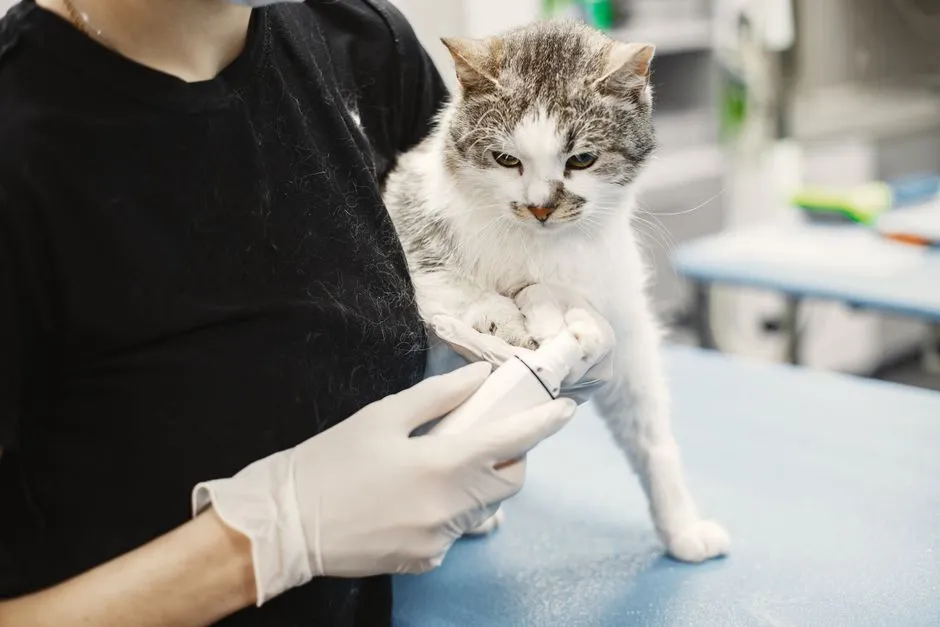
- Coat and claws. Grooming slows, so the coat can look matted or greasy. Claws grow thicker and can overgrow into the pads if you don't trim them.
None of these are reasons to panic. They're reasons to build a routine that catches problems while they're still small and cheap to manage.
The single most important habit: track weight
Weight loss is the most reliable early warning sign in a senior cat, and it's the one owners most often miss because it happens slowly and a fluffy coat hides it.
Weight loss in an older cat is never something to shrug off as normal aging. It almost always has a specific, findable cause, and several of those causes are very treatable when caught early.
Buy a cheap digital kitchen or baby scale and weigh your cat about once a month. Write it down or snap a photo of the readout with the date. A drop of even half a pound in a small animal is significant. If your cat has lost weight, or feels bonier along the spine and hips than it used to, that's a reason to book a vet visit, not to wait and watch.
Common reasons a senior cat loses weight
| Likely cause | What you might also notice |
|---|---|
| Hyperthyroidism | Big appetite, weight still dropping, restless, vomiting, scruffy coat |
| Chronic kidney disease | Drinking and peeing more, picky appetite, low energy, sometimes nausea |
| Diabetes | Increased thirst and urination, ravenous or poor appetite, weakness in the back legs |
| Dental pain | Dropping food, bad breath, chewing on one side, pawing at the mouth |
| Gastrointestinal disease or cancer | Vomiting, diarrhea, gradual wasting despite eating |
| Age-related muscle loss | Slow decline with otherwise normal appetite and behaviour |
You can't tell these apart at home, and that's the point: the same symptom can mean very different things. Bloodwork, a urine test, and a blood pressure reading usually sort it out quickly. Trying to guess, or switching foods on your own to "fatten them up," wastes time that early treatment could use.
Caring for an old cat, day to day
Good senior care is mostly small adjustments to the environment plus consistent monitoring. It isn't expensive or complicated.
Vet visits and testing
Healthy senior cats benefit from a checkup twice a year, not once. A year is a long time in the life of an 11-plus cat, and twice-yearly visits let your vet catch trends. Ask about baseline senior bloodwork, a urinalysis, and a blood pressure check. Having numbers on file matters, because a result that's technically "in range" but has moved a lot from last year can be the first hint of trouble.
Bring your weight log and a short list of anything you've noticed at home. You know your cat's normal better than anyone in the room.
It helps to know roughly what a senior screen looks at, so the results feel less like a black box:
- Kidney values (including a newer marker called SDMA) flag kidney disease earlier than the old tests did.
- Thyroid level checks for hyperthyroidism, a leading and very treatable cause of weight loss.
- Blood sugar helps screen for diabetes.
- Red and white blood cell counts can point to anemia, infection, or inflammation.
- Urine concentration tells your vet how well the kidneys are still working, sometimes before blood values shift.
- Blood pressure catches hypertension before it damages the eyes or other organs.
You don't need to memorize any of this. The point is that a senior panel is cheap insurance: it turns vague worry into specific answers and often finds problems while they're still easy to manage.
Food and hydration
Nutrition needs shift with age, and there's no single "senior diet" that suits every old cat. A thin cat with kidney disease and a chunky, arthritic cat need almost opposite plans. The goal is a highly digestible, palatable, complete diet that keeps muscle on and weight stable, adjusted to your individual cat's health. Our guide to food for older cats walks through how to choose one.
A few hydration basics help most seniors:
- Offer wet food, which carries a lot of water and helps aging kidneys.
- Provide multiple water sources; some cats drink more from a wide bowl or a fountain.
- Keep bowls away from walls (whiskers hate cramped bowls) and off high surfaces a stiff cat has to climb to.
Prescription diets (for kidney disease, for example) can genuinely extend and improve life, but they should come from your vet for a diagnosed condition, not from guesswork.
The home environment
Make the world easier to navigate:
- Litter boxes: Use boxes with at least one low side so an arthritic cat can step in without pain. Add an extra box, and put one on every floor the cat uses. Many "accidents" in older cats are really access problems or a medical issue, not spite.
- Steps and ramps: Give your cat a way to reach favourite perches and windowsills without a big leap. A stool or a couple of boxes works fine.
- Warmth: Older cats feel the cold. Offer a soft, warm bed away from drafts, ideally somewhere sunny.
- Grooming: Brush regularly to prevent mats, and check and trim claws every few weeks, since they overgrow more easily now.
- Consistency: Seniors handle change poorly. Keep furniture, feeding spots, and routines stable, and introduce anything new slowly.
Keep them moving and thinking
Gentle activity protects joints and muscle and staves off boredom. Short, low play sessions with a wand toy, food puzzles adjusted to be easy, and a window view for bird-watching all help. You're not trying to run a marathon; you're keeping the body and brain lightly engaged.
When to call the vet, and when it's an emergency
This is the part to take seriously. The rest of this article is education, not a diagnosis of your particular cat. Only your vet can examine, test, and treat. What follows is how to judge urgency.
Call your vet soon (within a day or two)
Book a visit if you notice any of these. They're common early signs of the conditions above, and earlier is always better:
- Weight loss, or ribs and spine feeling more prominent
- Drinking or urinating noticeably more (or less)
- Appetite change, up or down, or a change in what they'll eat
- Ongoing vomiting or diarrhea
- Bad breath, drooling, or trouble eating
- New lumps, or a wound that isn't healing
- Sleeping much more, hiding, or personality changes
- Litter box changes, including going outside the box
- Loud nighttime vocalizing or seeming disoriented
Our list of feline warning signs goes into more detail on how to read these at home.
Go to a vet immediately (emergency)
Some situations can't wait for a regular appointment. Treat these as emergencies and get to a vet or emergency clinic right away:
- Straining in the litter box, or not producing urine — especially in a male cat. A urinary blockage is rapidly life-threatening.
- Labored, rapid, or open-mouth breathing — cats almost never pant normally; open-mouth breathing is an emergency.
- Sudden weakness, collapse, or crying out with painful, dragging hind legs — this can signal a blood clot and is agonizing and urgent.
- Not eating anything for around 24 hours — in cats, a short period of not eating can trigger a dangerous liver problem, and it usually means something else is wrong.
- Sudden blindness, bumping into things, or wide fixed pupils — often linked to a blood-pressure crisis.
- Seizures, repeated vomiting, inability to stand, or pale, white, or bluish gums.
When in doubt with an older cat, call. A quick phone triage with your clinic beats guessing, and vets would much rather hear from you early.
Thinking honestly about quality of life
Most of senior care is about keeping a cat comfortable and well for as long as possible. But part of caring for an old cat is being willing to look at quality of life honestly, without either giving up too early or hanging on past the point that's kind.
There's no single test for this, and no shame in finding it hard. A practical way to think about it is to watch a handful of everyday things over time rather than judging any single bad day:
- Is your cat still eating and drinking with some interest?
- Can it get to the litter box, food, and a comfortable resting spot without struggle?
- Does it still seek out warmth, company, or a favourite window?
- Are the good days clearly outnumbering the bad ones?
- Is any pain being managed, or is it winning?
Chronic conditions like kidney disease, arthritis, and cancer are often managed for months or years with medication, diet, and small changes at home, and many cats do genuinely well on treatment. When the balance does start to tip, your vet can talk you through pain control, comfort-focused care, and honest options. Having that conversation early, before a crisis, tends to make it less frightening and gives you room to make decisions calmly rather than under pressure.
This isn't a reason to think about the end while your cat is thriving. It's a reason to keep watching the whole picture, so that whatever comes, your choices are grounded in how your cat is actually doing.
A realistic outlook
Plenty of cats live well into their late teens and beyond, and the difference between a rough old age and a comfortable one is usually not heroic medicine. It's the boring stuff: twice-yearly checkups, a monthly weigh-in, wet food and easy water, a low-sided litter box, a warm bed, and an owner who notices when something's off and picks up the phone.
Old age isn't a disease, but after 11 it's the season when treatable diseases like to appear quietly. Your job isn't to diagnose them. It's to spot the change early and let your vet do the rest.
The one-line takeaway: After 11, weigh your cat monthly, see the vet twice a year, and treat weight loss or increased thirst as a reason to book a visit rather than something to watch and wait on.
Frequently asked questions
At what age is a cat considered senior?
Most vets consider a cat senior from around 11 years old, following a period of 7 to 10 as a mature adult. Cats 15 and up are sometimes called geriatric. The exact number matters less than the pattern: after 11, quiet, treatable diseases become more likely, so screening and regular checkups become more valuable.
Why is my senior cat losing weight?
Weight loss in an older cat is never normal to ignore. Common causes include an overactive thyroid, chronic kidney disease, diabetes, dental pain, gastrointestinal disease, and cancer, plus age-related muscle loss. You can't tell these apart at home, but bloodwork, a urine test, and a blood pressure check usually identify the cause quickly, and many are very treatable when caught early.
How often should a senior cat see the vet?
Twice a year, rather than annually. A year is a long time for a cat over 11, and two visits let your vet track trends in weight, bloodwork, and blood pressure. Bring a home weight log and note any changes in thirst, appetite, litter box habits, or behaviour so nothing gets overlooked.
What are the emergency warning signs in an older cat?
Get to a vet immediately for straining or failing to urinate (especially males), labored or open-mouth breathing, collapse or sudden painful hind-leg weakness, not eating for around 24 hours, sudden blindness, seizures, repeated vomiting, or pale or bluish gums. These can't wait for a routine appointment. When unsure, call your clinic for phone triage.
Do senior cats need special food?
There's no single senior diet that fits every old cat; a thin cat with kidney disease and a heavy arthritic cat need different plans. Aim for a highly digestible, palatable, complete food that keeps muscle on and weight stable, and favour wet food for hydration. Prescription diets should come from your vet for a diagnosed condition, not from guesswork.