 CatsInfo
Cat Body Language: A Complete Guide to Tails, Ears and Eyes
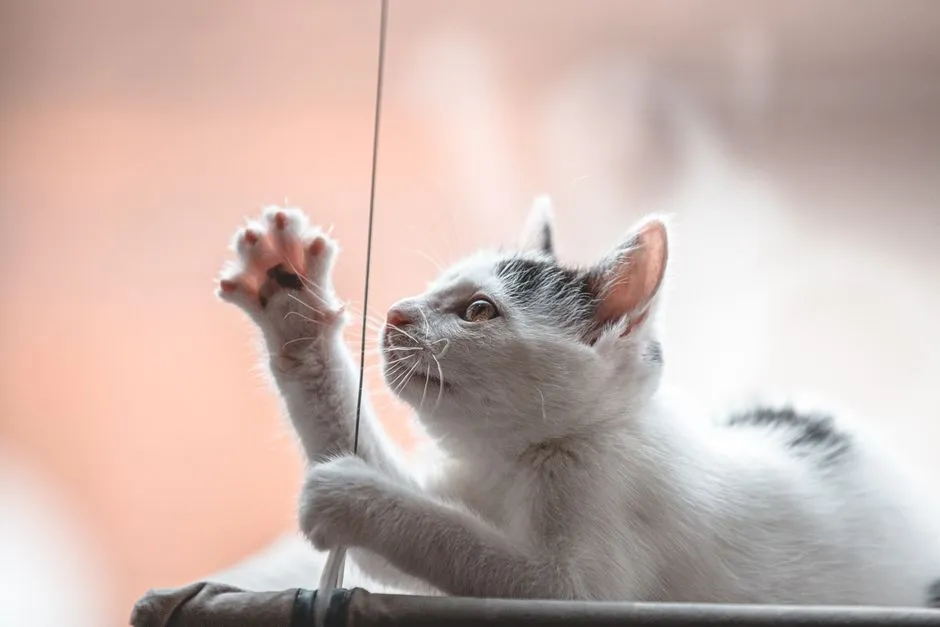
Why cat body language is worth learning
Cats talk constantly. The difference between them and dogs is that cats do most of it silently and with subtlety, so the messages slip past us. A dog that wants space usually makes it obvious. A cat that wants space may simply shift its tail tip, angle one ear, and hold very still — and if you miss those three quiet signals, the next one is often a swat or a bite.
Reading a cat well is not about memorizing a dictionary of poses. It is about learning to watch the whole animal at once and to read signals in context. A slowly swishing tail means one thing when your cat is stalking a toy and something very different when you are trimming its nails. This guide walks through the major channels cats use — tails, ears, eyes, posture, and whiskers — then shows how to combine them so you are reading the cat, not just a body part.
Read the whole cat, not one part
Before the details, one rule matters more than any single sign: no single body part tells the whole story. Ears flattened sideways during play can signal focused excitement; the same ears flattened while a cat crouches and stares can signal fear or defensiveness. The tail, ears, eyes, and posture are more like instruments in a small band. You want the overall tune.
Two things give you that context:
- The situation. What just happened? A stranger arrived, the vacuum turned on, another cat walked in, you reached toward the belly. Signals always attach to a trigger.
- The trend. Is the cat loosening or tightening? A cat moving toward relaxed — softening eyes, tail lowering, weight settling — is telling you something is going well. A cat tightening — pupils widening, tail thickening, weight gathering under it — is telling you to stop.
Keep those two questions in mind as you read the sections below, and the individual signals start to click together.
Cat tail language
The tail is the most expressive single part of a cat, partly because it is long, mobile, and easy for us to see from across a room. Think of it as a mood antenna. Height, shape, and movement each carry meaning.
Tail height and shape
- Tail up, held vertical, often with a soft curl at the tip. This is the friendly greeting. Cats raise their tails to approach humans and other cats they feel good about. A tail-up approach is an invitation — the closest thing a cat has to a wave hello. When your cat trots toward you with a tall, question-mark tail, you are being welcomed.
- Tail up and quivering or vibrating while backed up to a vertical surface can mean urine marking. But the same fast little quiver, without spraying, often just means intense happy excitement — many cats do it when you come home or when dinner is coming.
- Tail held low or level is neutral to slightly cautious in most cats, though this varies by breed. Some cats naturally carry their tails low. Watch for a change from your cat's own baseline rather than a fixed rule.
- Tail tucked down and wrapped under or against the body signals worry, submission, or pain. A cat making itself small and folding its tail away wants to avoid conflict.
- Puffed tail (piloerection), often in a bristled bottle-brush shape, means the cat is startled or frightened and trying to look bigger. It is an involuntary fear or arousal response, not aggression for its own sake. Give a piloerected cat room; do not reach for it.
- Tail arched over the back in a stiff inverted-U, frequently paired with an arched spine and sideways hop, is classic play or "Halloween cat" excitement, common in kittens and playful adults.
Tail movement
Movement is where owners most often misread cats, because a moving tail reads as friendly by dog logic. It usually is not.
- Slow, gentle sway in a resting cat is often mild interest or contentment.
- Twitching or flicking of the tail tip signals focus or mild irritation. You will see the tip flick when a cat watches a bird, and also when it is getting mildly annoyed with petting.
- A whole-tail lash or thump — a big, forceful swish — is a clear irritation or overstimulation warning. This is the cat equivalent of tapping a foot. When the tail starts thumping the sofa, stop what you are doing.
- Wrapping the tail around you or another cat, or around its own body while sitting, is an affiliative, comfortable gesture — a soft "we're okay."
A useful way to remember it: in cats, a fast, hard-moving tail usually means back off, not let's play together. The friendlier the message, the softer and more upright the tail tends to be.
Cat ear positions and meaning
Cats have around three dozen muscles controlling their ears, which is why the ears move so fast and so precisely. They rotate almost like small satellite dishes, and they track both sound and mood. Ear position is one of your best early-warning signals because it often shifts a beat before the rest of the body.
| Ear position | What it usually means | What to do |
|---|---|---|
| Upright, facing forward | Alert, relaxed, interested, engaged | Safe to interact; the cat is receptive |
| Swiveling / one ear rotating | Tracking a sound, dividing attention | Neutral; the cat is monitoring, not necessarily upset |
| Slightly to the side, low ("airplane ears") | Uncertain, uneasy, becoming overstimulated | Pause; give the cat a moment |
| Flattened sideways or forward-flat | Focused arousal — can be intense play or building tension | Read the rest of the body before continuing |
| Pinned flat back against the head | Fear, defensiveness, or imminent aggression | Stop and give space; do not reach |
The trickiest pair is "airplane ears" (rotated out to the sides and lowered) and pinned-back ears. Airplane ears often show conflicted or overstimulated feelings — the cat is not sure and is getting close to done. Fully pinned ears, flattened tight to protect them in a potential fight, are a strong signal to disengage immediately.
As always, pair the ears with context. Forward-flat ears on a cat mid-pounce during play are part of predatory focus. The same ears on a cat cornered by a strange dog mean something you must respect.
Cat eyes: pupils, blinks and stares
Eyes carry two separate streams of information: the pupils, which respond fast to arousal and light, and the eyelids and gaze, which reveal social comfort.
Pupils
Pupil size responds to light first — a cat in a bright room will have slit pupils, and one in a dim room will have round pupils, regardless of mood. Account for lighting before you read emotion into pupils.
Once you control for light, rapid dilation (pupils going wide and round) signals heightened arousal: excitement, fear, or a sudden surge of playful or defensive energy. Wide pupils on a crouched, still cat lean fearful. Wide pupils on a bouncing cat lean playful. Constricted, narrow pupils can accompany focused arousal or, in some contexts, tension and even offensive aggression. Because pupils move with both light and general arousal rather than one clean emotion, treat them as a volume knob — how intense the feeling is — and let the rest of the body tell you which feeling it is.
Blinks, gaze and the slow blink
- The slow blink is one of the most reliable friendly signals a cat offers. A cat that looks at you, then slowly closes and opens its eyes, is showing comfort and non-threat. You can return it: look softly, then slowly close and open your own eyes. Many cats will slow-blink back, and it is a genuine, gentle way to build trust with a shy cat.
- Soft, half-closed or droopy eyes in a settled cat signal relaxation and contentment, often alongside purring.
- A hard, unblinking stare is not friendly. Between cats, a direct fixed stare is a challenge or a threat, which is exactly why cats often gravitate to the one person in the room ignoring them — that person is being polite in cat terms. If your cat locks a wide-eyed stare onto another cat and holds it, tension is building.
Body posture, whiskers and the rest
Tails, ears, and eyes get the attention, but the trunk of the cat and its whiskers fill in crucial detail.
Overall posture
- Relaxed and loose — lying with limbs splayed, sitting with the body soft, or the classic "loaf" with paws tucked — signals a cat at ease. An exposed belly, in particular, is a sign of trust and comfort. Important caveat: a rolled-over belly is usually not a request for a belly rub. Many cats show the belly to say they feel safe, then bite or grab if you touch it. Admire it; do not always pet it.
- Crouched and tense, weight gathered, legs ready under the body, means fear or readiness to flee. A cat pressed low to the ground and trying to look small is frightened, not relaxed.
- Arched back with fur up and a sideways stance is the defensive threat display — the cat is trying to look as large as possible because it feels cornered.
- Leaning or turning away, walking off, retreating to a high perch are avoidance signals. A cat removing itself is asking for space, and honoring that quietly builds more trust than pursuing it.
Whiskers
Whiskers are subtle but honest. Whiskers pushed forward and fanned signal interest, hunting focus, or arousal — you will see it when a cat investigates something new or zeroes in on a toy. Whiskers pulled back flat against the cheeks often accompany fear or defensiveness. Whiskers in a neutral, relaxed spread to the sides go with a calm cat. They are small, so use them to confirm what the ears and eyes are already telling you.
Putting the signals together
Individual signs are the alphabet; reading a cat means reading whole words. Here is how the same body parts combine into three very different messages.
The confident, friendly cat: tail up with a soft tip, ears forward, eyes soft or slow-blinking, body loose, maybe trilling or meowing as it approaches. Everything is loose and upward. This cat wants interaction.
The overstimulated cat (petting gone too far): this is the one owners miss most. The cat was enjoying the attention, then the tail starts twitching or thumping, the skin along the back may ripple, the ears rotate to the sides, the head turns toward your hand, and the body stiffens slightly. These are the warnings that come before a bite. If you learn to stop here, you prevent most petting-related nips. For a deeper look at that specific pattern, see why cats bite.
The frightened or defensive cat: ears pinned or airplaned, pupils wide, tail puffed or tucked, body either crouched small or arched large, possibly hissing. This cat is not being "mean." It feels unsafe. The right response is to reduce pressure — stop approaching, give an exit, lower your body, look away — rather than to reach in and reassure, which often escalates things.
A quick comparison of the two easiest-to-confuse states
| Signal | Playful / aroused | Fearful / defensive |
|---|---|---|
| Body | Bouncy, springy, may hop sideways | Crouched small or arched and rigid |
| Tail | Arched in a U, or thrashing during a hunt | Puffed, tucked, or lashing hard |
| Ears | Forward or forward-flat, tracking the target | Pinned back or airplaned out |
| Pupils | Wide and bright, but relaxing between bursts | Wide and fixed, staying dilated |
| Recovery | Resets quickly, comes back for more | Stays tense, tries to retreat or hide |
The single best tell between these two is recovery. A playful cat resets between bursts and re-engages. A frightened cat stays wound up and looks for a way out.
Common misreads to avoid
A few myths cause most of the trouble:
- "A wagging tail means a happy cat." In dogs, often. In cats, a big moving tail usually means irritation. Read tail motion as a warning by default.
- "Showing the belly means rub my belly." Usually it means the cat trusts you enough to expose it. Touching it is a common way to get scratched.
- "Purring always means a happy cat." Purring mostly signals a desire for closeness or self-soothing, and cats also purr when stressed, in pain, or at the vet. Read purring alongside the rest of the body, not on its own.
- "My cat attacks me for no reason." There is almost always a reason and almost always a warning — a tail flick, a skin twitch, a turned ear. The signals were there; they were just quiet.
How to practice reading your cat
You get good at this the same way you get good at reading a friend's mood: repetition and attention.
- Set a baseline. Watch your cat when it is calm and undisturbed so you know its normal tail carriage, ear set, and resting face. Change from baseline is the real signal.
- Narrate to yourself. When you interact, quietly note what the tail, ears, and eyes are doing. Naming them trains your eye.
- Respect the first "no." When you see an early warning, stop and give space. Cats that learn their quiet signals get respected rarely need to escalate to biting — which makes them calmer, friendlier, and easier to live with over time.
- Watch multi-cat moments. Interactions between cats are a fast, rich lesson in stares, tail positions, and ear angles. Cats are the best teachers of cat language.
One-line takeaway: read the whole cat in context — friendly signals are loose and upward (tail up, ears forward, soft slow-blinking eyes), while warnings are tight and fast (thumping tail, pinned or airplaned ears, wide fixed pupils) — and when in doubt, give space.
Frequently asked questions
What does it mean when my cat wags its tail?
Unlike dogs, a cat wagging or thumping its tail usually signals irritation, not happiness. A big, forceful swish or lash means the cat is annoyed or overstimulated and wants you to stop. A gentle sway can mean mild interest, while a tall tail with a soft tip is the truly friendly greeting.
Why do cats slow blink at you?
A slow blink is a genuine friendly signal showing comfort and trust. The cat is telling you it feels safe and means no threat. You can return it by softening your gaze and slowly closing and opening your own eyes. Many cats will slow blink back, making it a gentle way to bond with shy or nervous cats.
What do flattened cat ears mean?
It depends on how flat and the context. Ears rotated out to the sides and lowered (airplane ears) signal uncertainty or overstimulation, a cue to pause. Ears pinned tight against the head signal fear, defensiveness, or possible aggression, meaning stop and give space. Forward-flat ears during play are focused excitement, not distress.
Does showing the belly mean my cat wants a belly rub?
Usually not. A cat rolling over to expose its belly is showing trust and comfort, not requesting a rub. Many cats will grab or bite if you touch the belly because it is a vulnerable area. Admire the pose as a compliment, but pet the head, cheeks, or chin unless you know your cat genuinely enjoys belly contact.
How do I know when my cat is about to bite during petting?
Watch for early warnings before the bite. The tail starts twitching or thumping, the skin along the back may ripple, the ears rotate to the sides, the head turns toward your hand, and the body stiffens. These signals come before the nip, so stopping when you see them prevents most petting-related bites.
What do a cat's pupils tell you about its mood?
Pupils respond to light first, so a bright room narrows them regardless of mood. Once you account for lighting, rapid dilation signals heightened arousal, which could be excitement, fear, or play. Treat pupil size as a volume knob showing how intense a feeling is, then use the tail, ears, and posture to tell which emotion it is.