 CatsInfo
Why Does My Cat Bite Me? Reading the Real Message
Biting Is Communication, Not Malice
A cat bite almost always means something specific. It is rarely spite, and it is never a moral failing on your cat's part. Cats bite because it works: it stops a hand they dislike, ends an interaction that has gone on too long, redirects energy that has nowhere else to go, or signals a mood you may have missed a few seconds earlier.
The useful question is not "why is my cat mean?" but "what was my cat trying to tell me, and what happened right before the teeth?" Once you learn to read the context and the cat body language leading up to a bite, most biting becomes predictable, and predictable behavior is behavior you can change.
This article walks through the real reasons cats bite, how to tell an affectionate nibble from a genuine warning, what the "bite then lick" combination actually means, and how to respond so bites happen less often.
The Main Reasons Cats Bite
Most bites fall into a handful of categories. Figuring out which one you are dealing with is the whole game, because the fix is different for each.
1. Overstimulation (petting-induced biting)
This is the classic scenario: your cat is on your lap, purring, apparently blissful, and then suddenly whips around and bites the hand that was petting it. Owners describe it as coming "out of nowhere." It almost never does.
Repetitive petting, especially along the back toward the tail base or the belly, can shift from pleasant to irritating for a cat. There is a threshold, and once it is crossed, the bite is a blunt "that's enough." Cats vary enormously in where that threshold sits. Some tolerate twenty minutes; some tolerate twenty seconds.
The good news is that overstimulation is highly readable if you watch for the pre-bite signals, which come every single time:
- Skin twitching or rippling along the back
- Tail lashing, thumping, or flicking faster
- Ears rotating sideways or flattening ("airplane ears")
- Turning the head sharply toward your hand
- Body going tense or still after being relaxed
- Dilated pupils
2. Play aggression and predatory energy
Kittens and young cats bite as play. Hunting, pouncing, wrestling, and biting are how kittens practice being predators, and biting littermates is how they learn to calibrate the force of their jaws — a process called bite inhibition. A kitten raised alone, or weaned and separated very early, often misses those lessons and plays too rough with human hands.
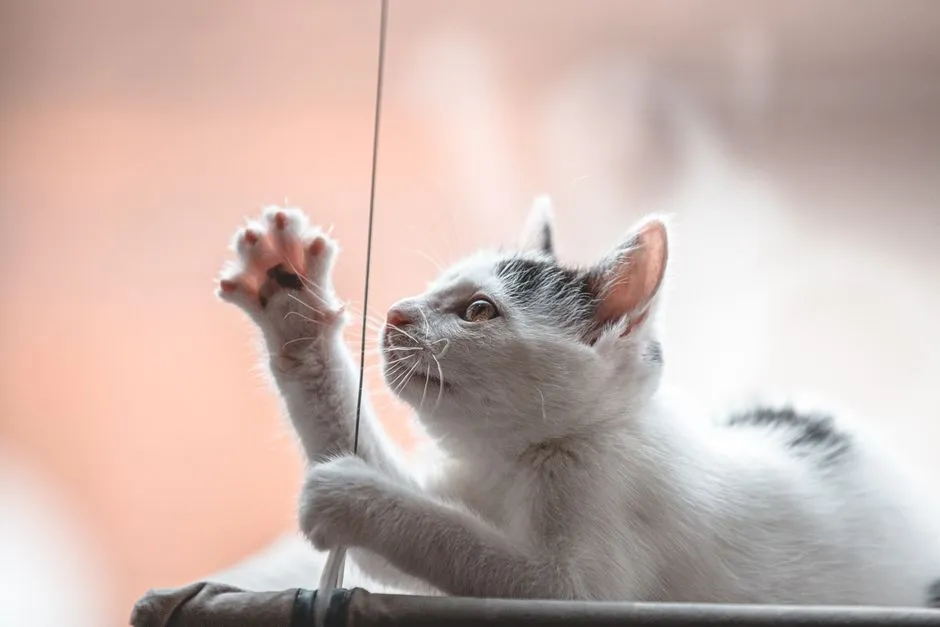
If your cat ambushes your ankles, grabs your hand and "bunny-kicks" it with the back feet, or bites during a wrestling game, that is predatory play, not anger. The body language is loose and bouncy, not tense and defensive. The problem is usually that a human hand or foot has been allowed to become the toy.
3. Fear, pain, or defense
A frightened or cornered cat bites to create distance. A cat in pain bites when you touch the sore spot. These bites tend to be harder and are paired with defensive signals: crouching, leaning away, hissing, a puffed tail, flattened ears, or a low growl.
Pain deserves special emphasis. A cat that suddenly starts biting when touched in a particular place — or a previously gentle cat that becomes snappy for no clear reason — may be hurting. Dental disease, arthritis, an abscess, or an injury can all turn handling into something that hurts. New or escalating irritability is a reason to see a vet, and it is a common thread in sudden aggression.
4. Redirected aggression
Sometimes a cat is worked up by something it cannot reach — a cat outside the window, a strange noise, a new smell — and the nearest available target gets the bite instead. This is redirected aggression. It can look shocking and unprovoked because the trigger is invisible to you. The tell is context: the cat was already aroused before you were involved.
5. Attention, learning, and habit
Cats are excellent at learning what gets a reaction. If a gentle nip once got you to fill the food bowl, pick them up, or start a game, biting can become a deliberate request. Any response — even pushing the cat away or scolding — can register as attention and reinforce the behavior. Cats also nip to say "follow me" toward the food cupboard or the door.
6. Kitten teething
Kittens between roughly three and six months are losing baby teeth and growing adult ones, and their gums are sore. They chew and bite more during this window. It usually passes, but it is a good age to teach that hands are not chew toys.
"Why Does My Cat Bite Me Then Lick Me?"
This is one of the most common questions owners ask, and it worries people more than it should. The bite-then-lick sequence usually falls into one of a few benign categories.
Most often it is grooming and social bonding. Cats groom each other (called allogrooming) and themselves using a mix of licking and small, gentle nibbles — the little nips help work through fur and tangles. When your cat does this to you, it is treating you as part of its social group. The lick that follows a soft bite is affiliative behavior, not an apology.
It can also be mild overstimulation with a quick reset: a gentle nip to say "ease up," followed by a lick to smooth things over and keep the contact going. And sometimes it is simply play that includes grab-lick-nibble cycles.
The key is force and body language. A soft mouthing with relaxed ears, half-closed eyes, and a loose body is affection. A hard bite paired with a lashing tail, flat ears, or a tense body is not — that is a warning, whatever the licking that follows. Do not assume a lick "cancels out" a real bite.
Love Bites: Affection or Warning?
"Love bite" is a real thing owners describe, but the phrase gets stretched to cover two very different behaviors. Learning to separate them is the single most useful skill here.
| Feature | Love bite / gentle nibble | Warning or aggressive bite |
|---|---|---|
| Pressure | Soft; teeth barely close, no pain, no broken skin | Firm to hard; can hurt or break skin |
| Body | Relaxed, loose, may be purring or kneading | Tense, still, crouched, or leaning away |
| Ears | Neutral, forward | Flattened, sideways ("airplane") |
| Tail | Still or gently swaying | Lashing, thumping, or puffed |
| Eyes | Soft, half-closed, slow blinks | Wide, staring, pupils dilated |
| Context | During grooming, cuddling, calm contact | After prolonged petting, near a trigger, when in pain |
| What it means | Social bonding, mild "enough" | "Stop now" or "back off" |
A genuine love bite is a communication of comfort — the feline equivalent of a nibble between bonded cats. It should not hurt. If your cat's "love bites" regularly break skin or leave marks, treat them as overstimulation or play biting and manage them accordingly, no matter how affectionate the mood seems.
How to Respond in the Moment
What you do the instant a bite happens shapes whether it happens again. A few principles apply across almost every type of bite.
- Freeze, then withdraw calmly. When teeth make contact, stop moving. Cats are wired to chase movement, so jerking your hand away can trigger a harder grab. Once the mouth loosens, slowly remove your hand and end the interaction.
- Do not punish. Yelling, tapping the nose, spraying water, or scruffing does not teach a cat what to do instead. It usually increases fear and can make biting worse, and it damages the trust between you. Cats do not connect punishment with their behavior the way people imagine.
- End the attention. The most powerful message is often the least dramatic one: stand up, put the cat down gently, and walk away. The reward — your hands, your lap, the game — simply disappears.
- Never use hands or feet as toys. This is the most common self-inflicted cause of biting. Redirect onto a wand toy, a kicker toy, or something the cat can legitimately catch and bite.
Preventing Bites Long-Term
Managing bites is mostly about staying ahead of them rather than reacting after the fact.
Learn your cat's threshold. Count how long petting usually goes before signals appear, and stop a beat before that point. Ending contact while the cat is still happy teaches it that being handled is safe and predictable.
Watch the tail and ears, always. These are your early-warning system. A tail that starts lashing or ears that swivel back are asking you to pause. Reading those signs turns "sudden" bites into ones you saw coming.
Give predators an outlet. Two short play sessions a day with a wand toy, ending in a "catch" the cat can bite and a small treat, drains the energy that would otherwise land on your ankles. A tired hunter is a gentler roommate.
Redirect, don't wrestle. Keep a toy within reach in the spots where your cat tends to get mouthy, and steer the biting onto it.
Rule out pain first. If biting is new, escalating, or tied to being touched in one area, book a vet visit before assuming it is behavioral. Pain is one of the most overlooked causes, and it is fixable.
Respect the "no." A cat that has learned its signals are heard — that a twitching tail reliably ends the petting — has far less reason to escalate to teeth. Much of good cat handling is simply believing your cat the first time it tells you something.
The One-Line Takeaway
A cat bite is a sentence, not an insult: read the body language and the moment right before it, respond by calmly ending the interaction instead of punishing, and most biting fades.
If bites are hard, frequent, drawing blood, or clearly driven by fear or pain, loop in your veterinarian — sometimes with a referral to a qualified feline behaviorist — to rule out a medical cause and build a plan that fits your specific cat.
Frequently asked questions
Why does my cat bite me then lick me?
This is usually social bonding, not an apology. Cats groom each other with a mix of gentle nibbles and licks, so bite-then-lick often means your cat treats you as family. It can also be a mild 'ease up' nip smoothed over with a lick. If the bite is hard and the body tense, treat it as a warning, not affection.
What are cat love bites?
Love bites are soft, gentle nibbles where the teeth barely close and the skin is never broken. They happen during calm cuddling or grooming, usually with relaxed ears, a still tail, and half-closed eyes. They signal comfort and bonding. If a 'love bite' regularly hurts or breaks skin, it is really overstimulation or play biting and needs managing.
Why does my cat bite me suddenly while being petted?
That is petting-induced overstimulation. Repetitive stroking can shift from pleasant to irritating, and the bite means 'enough.' It seems sudden but is not: watch for skin twitching, a lashing tail, sideways ears, and a tense body. Stop petting a moment before those signs appear to prevent the bite.
Should I punish my cat for biting?
No. Yelling, nose-tapping, water spraying, or scruffing does not teach an alternative and usually increases fear, worsens biting, and damages trust. Instead, freeze when bitten, calmly withdraw once the mouth loosens, and end the interaction by standing up and walking away. Removing attention and redirecting onto toys works far better.
How do I stop my cat biting my hands during play?
Never let hands or feet become toys. Redirect all biting onto wand toys or kicker toys the cat can legitimately catch and bite. Give two short daily play sessions that end in a catch and a treat to drain hunting energy. If a hand gets grabbed, go still, then slowly disengage rather than pulling away.
When should I see a vet about my cat biting?
See a vet if biting is new, escalating, or triggered by touching one specific area, since pain from dental disease, arthritis, or injury is a common hidden cause. Also seek help if bites are hard, frequent, break skin, or driven by fear. Your vet may refer you to a qualified feline behaviorist for a tailored plan.